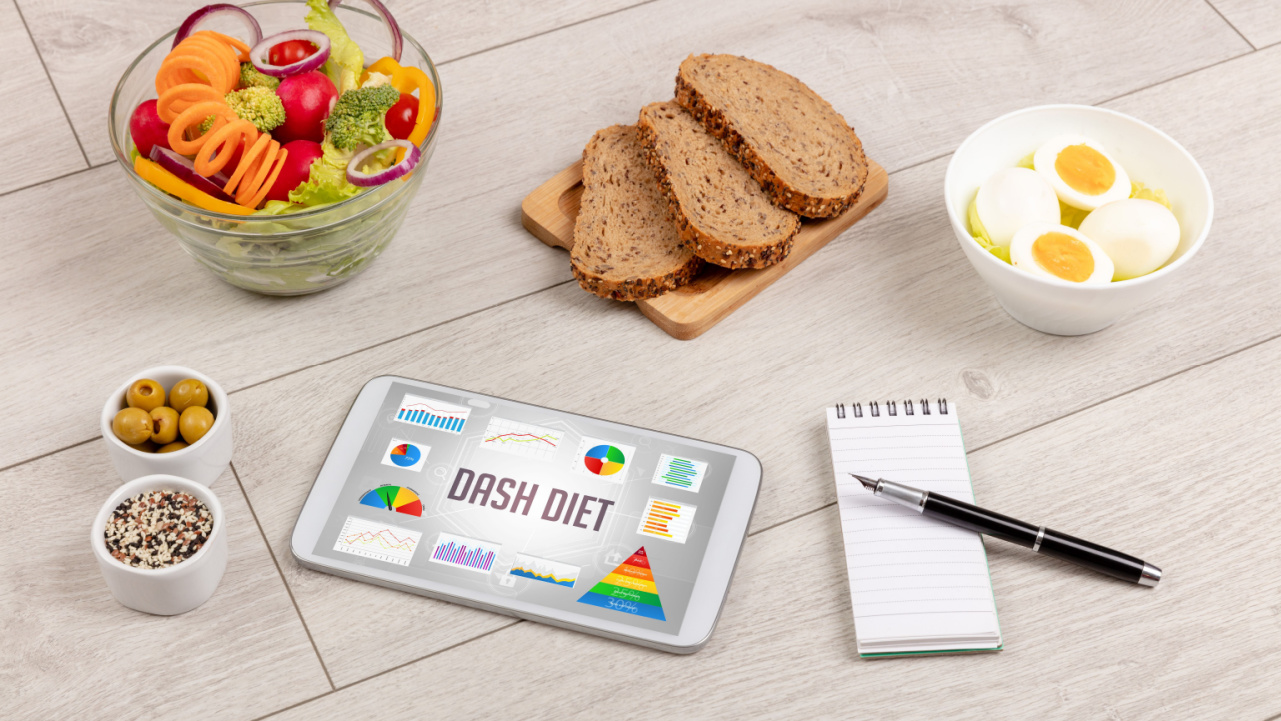
Are you overwhelmed by the numerous weight loss methods and diet plans advertised for heart health? In this blog, we examine the DASH diet and evaluate the scientific evidence behind this diet and helpful resources for you. The DASH diet, which stands for Dietary Approaches to Stop Hypertension, is an eating plan designed to lower blood pressure and improve overall health. The diet emphasizes fruits, vegetables, whole grains, lean protein, and low-fat dairy products and limits saturated fat, cholesterol, and total fat. The DASH diet also includes moderate amounts of nuts, seeds, and legumes.
Research has shown that the DASH diet can lower blood pressure and reduce the risk of heart disease, stroke, and other health problems. The DASH diet may also help prevent or improve other health conditions such as osteoporosis, cancer, and kidney stones. The DASH diet is a healthy eating plan that can be followed by anyone looking to improve their overall health and well-being. We have listed five things you should know about the DASH diet for heart health.
What Does The Original DASH Diet Plan Include?
The original DASH diet plan, which stands for Dietary Approaches to Stop Hypertension, includes a focus on eating nutrient-dense foods, such as:
- Fruits and vegetables: These foods are high in potassium, magnesium, and calcium, which can help lower blood pressure.
- Whole grains: Whole grains, such as whole wheat bread, oatmeal, and brown rice, are rich in fiber, vitamins, and minerals.
- Lean protein: The DASH diet includes lean protein sources, such as chicken, fish, and legumes, low in saturated fat and cholesterol.
- Low-fat dairy products: The diet promotes low-fat dairy products, such as milk, yogurt, and cheese, which are rich in calcium and other nutrients.
- Nuts, seeds, and legumes: These foods are included in moderate amounts in the DASH diet, as they are a good source of protein, healthy fats, and fiber.
The table below includes examples of daily and weekly servings that meet DASH eating plan targets for a 2,000-calorie-a-day diet. (Ref. Link)
| Food Group | Daily Servings |
| Grains | 6–8 |
| Meats, poultry, and fish | 6 or less |
| Vegetables | 4–5 |
| Fruit | 4–5 |
| Low-fat or fat-free dairy products | 2–3 |
| Fats and oils | 2–3 |
| Sodium | 2,300 mg* (while 1,500 milligrams (mg) sodium lowers blood pressure even further than 2,300 mg sodium daily.) |
| Weekly Servings | |
| Nuts, seeds, dry beans, and peas | 4–5 |
| Sweets | 5 or less |
What Are The DASH Diet Sodium Limits?
The original DASH diet plan includes limits on dietary sodium intake, intending to reduce blood pressure and improve overall health. The DASH diet plan consists of three levels of sodium intake:
- The “regular” DASH diet: This diet level includes a daily sodium intake of 2,300 milligrams (mg). This is the equivalent of about one teaspoon of salt.
- The “intermediate” DASH diet: This diet level includes a daily sodium intake of 1,500 mg. This is the equivalent of about 2/3 teaspoon of salt.
- The “low” DASH diet: This diet level includes a daily sodium intake of 1,200 mg. This is the equivalent of about 1/2 teaspoon of salt.
Most of us consume more sodium than we need. The American Heart Association (Ref. Link) recommends no more than 2,300 mg per day and ideally less than 1,500 mg per day for most adults. The DASH diet is consistent with these recommendations. It encourages one to limit the intake of processed foods and restaurant meals, which are often high in sodium.
Can You Turn Your Favorite Recipes DASH Diet Friendly?
Yes, you can turn recipes dash-friendly. Make your favorite recipes DASH-compliant by:
- Decreasing the amount of salt by not using the salt shaker and limiting high-sodium sauces.
- Incorporating more vegetables and fruits into the recipe.
- Using less meat or selecting lean, skinless meats.
- Substituting butter or solid oils with unsaturated oils such as olive, canola, or avocado.
- Using whole grains instead of processed white bread and grains.
We recommend you make gradual changes over days or weeks to make it easier to adjust and make DASH a part of your daily routine:
- Gradually increase your daily intake of vegetables by adding a serving at lunch one day and dinner the next, and incorporate fruit into one meal or snack.
- Gradually increase your use of fat-free and low-fat dairy products to three servings per day.
- Gradually limit your intake of lean meats to 6 ounces per day, about 3 ounces per meal, roughly the size of a deck of cards.
- If you usually eat large portions of meat, gradually reduce the amount for days or weeks by cutting it back by half or a third at each meal.
- Incorporate two or more meatless meals per week in your diet.
What Are The Other Lifestyle Changes To Consider with DASH Diet?
Following the DASH diet and making these lifestyle changes together can lead to better health and well-being.
- Regular physical activity: Regular physical activity is essential for maintaining a healthy weight and reducing the risk of heart disease and other health problems. Aim for at least 150 minutes of moderate-intensity aerobic exercise or 75 minutes of vigorous-intensity aerobic activity per week. Add a Smart Heart Monitor such as the Frontier X2 and easily track your heart health.
- Maintaining a healthy weight: Being overweight or obese increases the risk of heart disease and other health problems. Ensure that you achieve your target weight as per your height. This can help lower blood pressure and improve overall health.
What Are The Sources of Information on the DASH Diet?
Your physician may have suggested this dietary plan to you. It is also supported by several reputable organizations, such as:
- The National Heart, Lung, and Blood Institute (NHLBI) is one of the National Institutes of Health and part of the US Department of Health and Human Services.
- The American Heart Association
- The Dietary Guidelines for Americans
- US guidelines for managing hypertension
All of these organizations recognize the effectiveness of the DASH diet in reducing blood pressure and improving overall health. In the 2021 Best Diets report by US News & World Report, the Dietary Approaches to Stop Hypertension (DASH) diet received top honors, tying for first place in both “Best Diets for Healthy Eating” and “Best Heart-Healthy Diets” categories.
Frequently Asked Questions:
What is the DASH diet?
The DASH diet stands for Dietary Approaches to Stop Hypertension and is a diet plan to lower blood pressure and improve overall health. The diet encourages eating nutrient-dense foods, such as fruits, vegetables, whole grains, lean protein, and low-fat dairy products, while limiting saturated fat, cholesterol, and total fat.
What foods can I eat on the DASH diet?
The DASH diet includes a variety of nutrient-dense foods, such as fruits and vegetables, whole grains, lean protein, and low-fat dairy products. Nuts, seeds, and legumes are also included in moderate amounts. The diet also limits the intake of saturated fat, cholesterol, and total fat.
How much sodium can I consume on the DASH diet?
The DASH diet includes limits on dietary sodium intake, intending to reduce blood pressure and improve overall health. The DASH diet plan consists of three levels of sodium intake: 2,300 mg, 1,500 mg, and 1,200 mg per day.
What other lifestyle changes should I consider along with the DASH diet?
In addition to following the DASH diet plan, several other lifestyle changes can support and enhance the health benefits of the DASH diet. These include regular physical activity, maintaining a healthy weight, managing stress, limiting alcohol consumption, and not smoking.
Do any reputable organizations recommend the DASH diet?
The DASH diet is recommended by several reputable organizations, such as the National Heart, Lung, and Blood Institute, the American Heart Association, the Dietary Guidelines for Americans, and US guidelines for managing hypertension. In the 2021 Best Diets report by US News & World Report, the DASH diet received top honors, tying for first place in both the “Best Diets for Healthy Eating” and “Best Heart-Healthy Diets” categories.
Other Heart Health Topics To Explore:
Stress Test for Heart | Long Covid Symptoms | Best Vitamins For Heart Health | Best Bed Time For Heart Health | Heart Rate Variability | Stress impact on Women’s Heart | Yoga for Heart Health | Silent heart attack risks | Running Heart Rate Zones | Heart Attack causes
Frontier X2:
Smart Heart ECG Monitor in USA | ECG Machine Price in India | Best Heart Rate Monitor UK