

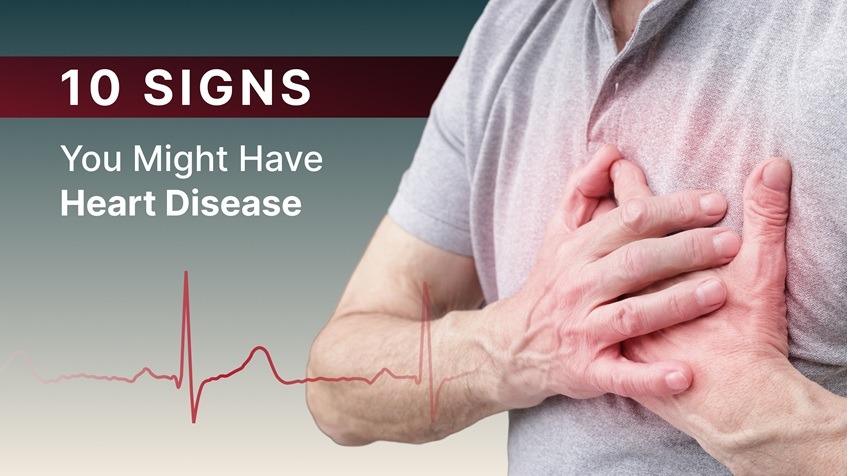
Heart disease does not always arrive with a dramatic warning. For many people, the signs start quietly; a little fatigue here, shortness of breath there, something just feels off. You might brush it aside as stress or aging, but your heart may be trying to tell you something important.
Understanding the early signs of heart disease helps you take action sooner. When you listen to your body and track changes over time, you give yourself the best chance to protect your heart health.
Here are ten signs you should never ignore.
1. Chest Discomfort or Pressure
Chest discomfort is one of the most well-known signs of heart disease, but it does not always feel like sharp pain. You may feel pressure, tightness, heaviness, or a squeezing sensation in the center or left side of your chest.
This discomfort may come on during activity or emotional stress and ease with rest. Even mild recurring chest sensations deserve attention, especially if they feel new or unusual for you.
2. Shortness of Breath During Normal Activities
If you find yourself getting breathless while walking, climbing stairs, or doing everyday tasks that once felt easy, your heart may be struggling to pump blood efficiently.
3. Unexplained Fatigue or Low Energy
Persistent fatigue that does not improve with rest can be a subtle sign of heart disease. When your heart cannot deliver enough oxygen-rich blood to your muscles and organs, your energy levels drop.
You may feel exhausted after routine tasks or notice that exercise feels harder than it used to.
4. Irregular Heartbeat or Palpitations
Feeling like your heart is racing, fluttering, skipping beats, or beating unevenly can be unsettling. Occasional palpitations can be harmless, but frequent irregular heartbeats should not be ignored.
Heart rhythm changes may point to underlying heart disease, especially when combined with dizziness or fatigue.
5. Swelling in Legs, Ankles, or Feet
Swelling in the lower body can be a sign that your heart is not pumping blood effectively. When blood flow slows, fluid can build up in the legs, feet, or abdomen.
This swelling often worsens by the end of the day and may improve overnight. It is commonly seen in people with heart failure or advanced heart disease.
6. Dizziness, Lightheadedness, or Fainting
If you feel dizzy, lightheaded, or close to fainting, your heart may not be maintaining adequate blood flow to your brain.
Heart rhythm disorders, structural heart disease, or valve problems can all interfere with blood circulation and cause these symptoms.
7. Persistent Cough or Wheezing
A chronic cough or wheezing that does not resolve may be related to fluid buildup in the lungs. This can happen when the heart struggles to manage blood flow efficiently.
8. Cold Sweats, Nausea, or Indigestion-like Symptoms
Heart disease symptoms do not always look like chest pain. Cold sweats, nausea, dizziness, or indigestion-like discomfort can all be warning signs, particularly during physical exertion or emotional stress.
These symptoms are sometimes dismissed as stomach issues, but can be heart-related.
9. Reduced Exercise Tolerance
If you notice that you cannot exercise as long or as intensely as you once could, your heart may be under strain.
10. Poor Sleep or Nighttime Breathing Issues
Nighttime symptoms often reflect fluid shifts and heart rhythm changes that occur during sleep.
Why These Signs Are Easy to Miss
Many signs of heart disease develop gradually. They may come and go or feel mild at first. You might adjust your lifestyle unconsciously to compensate, walking more slowly or resting more.
This is why awareness matters. Changes over time are often more important than a single bad day.
The Importance of Monitoring Heart Rate and Rhythm
Heart disease is often reflected in patterns rather than isolated events. Monitoring heart rate and rhythm over extended periods helps identify subtle changes that routine clinic visits may miss.
Understanding how your heart behaves during activity, rest, and sleep provides valuable context for clinical evaluation.
How Frontier Devices Support Heart Health Awareness
Modern heart monitoring tools help bridge the gap between symptoms and clinical insight.
The Frontier X Plus is a prescription medical-grade US FDA-cleared long-term ECG monitor worn on the chest. It records continuous single-channel ECG data over extended periods while you go about your daily life. Physicians can use this data to interpret heart rhythm trends and evaluate potential heart disease.
The Frontier X2 is a wellness-grade device that records ECG and heart rate for fitness and wellbeing tracking. While it does not diagnose conditions, it provides detailed heart rate and trend data that helps you understand how your heart responds to daily activities, exercise, and rest.
These tools support awareness and informed discussions with your healthcare provider.
Place this section after the signs list and before the lifestyle or prevention sections.
When You Should See a Doctor
You should seek medical advice if you experience:
- Recurring chest discomfort
- Shortness of breath without a clear cause
- Irregular heartbeat with symptoms
- Swelling or unexplained fatigue
- A sudden decline in physical capacity
Early evaluation can prevent complications and support timely care.
How You Can Protect Your Heart
Heart disease risk can often be reduced through:
- Regular physical activity
- Balanced nutrition
- Stress management
- Adequate sleep
- Tracking heart trends over time
Small, consistent steps make a meaningful difference.
Final Thoughts
Your heart works tirelessly for you every day. When it sends warning signs, listening early can change everything.
Heart disease rarely announces itself loudly at first. It whispers through fatigue, breathlessness, rhythm changes, and subtle discomforts. Paying attention to those whispers empowers you to act before serious damage occurs.
Awareness combined with monitoring and medical guidance gives you control over your heart health journey.
FAQs
1. What are the early signs of heart disease?
Early signs include fatigue, shortness of breath, chest discomfort, irregular heartbeat, and reduced exercise tolerance.
2. Can heart disease exist without chest pain?
Yes. Many people experience heart disease through fatigue, breathlessness, nausea or rhythm changes without chest pain.
3. How do I know if my irregular heartbeat is serious?
If irregular heartbeats are frequently persistent or associated with dizziness, fatigue, or shortness of breath, you should seek medical evaluation.
4. Can monitoring heart rate help detect heart disease?
Tracking heart rate and rhythm trends over time can help identify changes that may indicate underlying heart problems.
5. When should I seek urgent care for heart symptoms?
Seek urgent care for chest pain, fainting, sudden shortness of breath, or severe dizziness.
Related Posts
You might also like

-

Featured Articles
- 10 Signs You Might Have Heart Disease
 March 24, 2026
 - The Best Way to Track Heart Rate in the Gym: Wrist...
 March 22, 2026
 - Why Body Shock Monitoring Is Crucial for Every Athlete
 January 7, 2026
-
JOIN OUR NEWSLETTER
Get the latest articles, tips, offers & other exclusive content from Fourth Frontier.
