

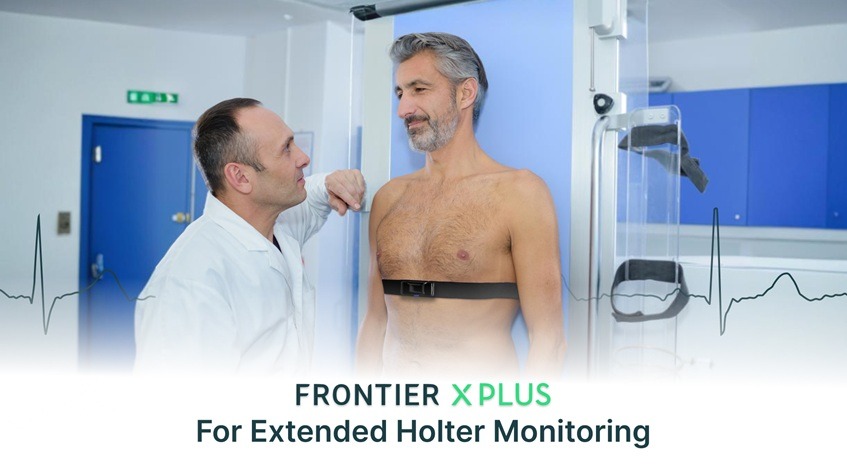
Holter monitoring has been a cornerstone of cardiac diagnostics for decades. If you have ever undergone a Holter test, you already know its value and its limitations. Traditional Holter monitors capture your heart rhythm over a short window, often 24 to 48 hours, while you try to live as normally as possible with wires, patches, and a recorder attached to your body.
Today, your lifestyle has changed. Your activity levels vary widely. Symptoms may not appear on schedule. And clinicians increasingly need heart rhythm data captured during exercise, sleep, and daily routines rather than just during a brief monitoring window.
This is where Frontier X Plus is reshaping how Holter-style monitoring can be approached.
What is Holter Monitoring and Why it Matters
Holter monitoring is used to assess heart rhythm over an extended period while you go about your daily life. It is commonly prescribed when you experience
- Palpitations
• Dizziness or fainting
• Suspected atrial fibrillation
• Unexplained changes in heart rate
• Evaluation of treatment effectiveness
The goal is simple. Capture heart rhythm data long enough to correlate symptoms with the electrical activity of the heart.
However, traditional Holter systems often struggle to capture intermittent or activity-related rhythm changes.
Limitations of Traditional Holter Monitors
While Holter monitors remain clinically valuable, you may encounter several challenges
Short Monitoring Duration
Most traditional Holter tests last only one to two days. Many rhythm disturbances occur less frequently and may be missed entirely.
Limited Activity Capture
Exercise-induced rhythm changes are difficult to assess accurately when bulky recorders restrict natural movement.
Comfort and Compliance Issues
Adhesive patches can irritate skin. Wires can loosen. Sleep quality may be affected, reducing data quality.
Delayed Data Access
In many cases, data is reviewed only after the device is returned, delaying clinical decisions. These gaps have driven interest in newer medical-grade wearable solutions.
How Frontier X Plus Fits Into Holter Style Monitoring
Frontier X Plus is a medical-grade, prescription-based, FDA-cleared long-term ECG monitor designed to support extended heart rhythm assessment in real-world conditions.
Instead of replacing Holter monitoring, it modernizes the experience for both you and your clinician.
Extended Monitoring Duration
Frontier X Plus supports multi-day monitoring beyond the traditional Holter window. This increases the likelihood of capturing intermittent rhythm abnormalities that may not appear within 24 hours.
Hands Free Wearability
The chest-worn design allows you to move naturally. You can walk, exercise, sleep, and go about daily routines with minimal disruption.
Real World Activity Context
Unlike conventional Holter devices, Frontier X Plus captures heart rhythm data during physical activity, rest, and sleep. This provides valuable context for understanding symptom triggers.
Holter Monitoring During Exercise and Daily Life
One of the biggest limitations of patch-based Holter monitors is their performance during movement.
Frontier X Plus is designed to remain stable during activity, making it particularly useful when
- Symptoms appear during exercise
• Heart rate spikes occur with exertion
• Rhythm changes are activity dependent
• Monitoring is needed in active or working individuals
For clinicians managing patients with exertional symptoms, this adds a layer of insight that traditional Holter tests often lack.
Sleep and Overnight Heart Rhythm Assessment
Many rhythm disturbances occur at night when heart rate slows and autonomic balance shifts.
Frontier X Plus supports overnight monitoring without cumbersome wires or adhesive patches pulling on the skin. This improves sleep comfort and data consistency, helping clinicians observe nocturnal heart rhythm trends more reliably.
Remote Data Access and Clinical Workflow
From a clinical operations perspective, one of the key advantages of Frontier X Plus is workflow efficiency.
- Devices can be provisioned remotely
• Data is accessible without waiting for physical returns
• Monitoring can continue without repeated clinic visitsMonitoring can be extended based on the physician’s clinical judgement, reducing the need for unnecessary in-person visits.
For Holter clients managing higher patient volumes, this reduces logistical overhead while supporting smoother clinical workflows.
Frontier X Plus vs Traditional Holter Patches
Wear Duration
Traditional Holter monitors are typically limited to short windows. Frontier X Plus enables longer monitoring when clinically appropriate.
Patient Experience
Chest-worn design avoids adhesive-related skin irritation common with patch-based systems.
Activity Tolerance
Frontier X Plus performs reliably during daily movement and exercise, areas where patch monitors often struggle.
Data Richness
Extended monitoring across varied conditions allows clinicians to assess heart rhythm trends rather than isolated snapshots.
Role of Frontier X Plus in Heart Rhythm Monitoring
The Frontier X Plus is a medical-grade, FDA-cleared, prescription-based long-term ECG monitor intended for clinician-supervised ambulatory use. It allows extended recording of heart rhythm and heart rate data during daily activities, rest, and sleep, providing physicians with real-world insights into how your heart behaves outside of the clinic.
By capturing high-fidelity single-lead ECG waveforms over time, the device helps clinicians observe rhythm trends, assess variability, and review patterns that may be associated with conditions such as atrial fibrillation, tachycardia, or bradycardia. This longitudinal data can support more informed clinical evaluation and follow-up, particularly for patients with known or suspected heart rhythm concerns.
Because it is comfortable, patch-free, and designed for everyday wear, Frontier X Plus enables consistent monitoring without disrupting daily life, making it a practical tool for ongoing cardiac oversight under medical supervision.
Who Can Benefit Most From Frontier X Plus Holter Monitoring
You may benefit from this approach if
- Symptoms occur intermittently
• Exercise triggers heart rhythm changes
• Prior Holter tests were inconclusive
• Long-term monitoring is clinically recommended
• Comfort and compliance are concerns
Clinics managing high volumes of ambulatory monitoring patients may also find operational advantages in device reuse and remote provisioning.
FAQs
What is Holter monitoring used for?
Holter monitoring is used to assess heart rhythm over time to identify irregular heartbeats, heart rate changes, and rhythm patterns associated with symptoms.
How long can Holter-style monitoring last?
Traditional Holter tests last 24 to 48 hours, but newer wearable monitors like Frontier X Plus can support longer monitoring periods when prescribed for up to 30 days.
Can heart rhythm issues be missed on a standard Holter test?
Yes. Intermittent rhythm disturbances may not occur during short monitoring windows, which is why extended monitoring can be valuable.
Is Frontier X Plus a replacement for a Holter monitor?
Frontier X Plus serves as a modern alternative for Holter-style monitoring, offering longer wear duration and improved comfort while supporting clinical assessment.
Can heart rhythm be monitored during exercise?
Yes. Devices designed for active wear can capture heart rhythm data during exercise, which is important when symptoms are activity-related.
Final Thoughts
Holter monitoring remains an essential diagnostic tool, but patient lifestyles and clinical needs have evolved. Frontier X Plus brings flexibility, comfort, and extended insight into heart rhythm monitoring without compromising clinical intent.
If you or your patients need a more adaptable approach to long-term heart rhythm assessment, modern wearable solutions can help bridge the gap between traditional diagnostics and real-world heart health.
Related Posts
You might also like




-

Featured Articles
- Why Body Shock Monitoring Is Crucial for Every Athlete
 January 7, 2026
 - Frontier X2 vs Smart Ring: Which Wellness Tracker Knows...
 November 28, 2025
 - The ROI of Investing in Frontier X2 With HSA/FSA
 November 21, 2025
-
JOIN OUR NEWSLETTER
Get the latest articles, tips, offers & other exclusive content from Fourth Frontier.
