

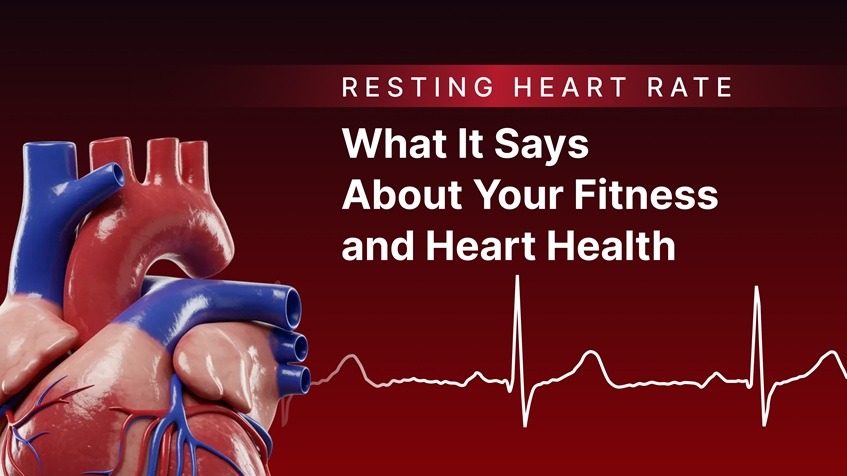
Your resting heart rate is one of the simplest yet most powerful indicators of how well your heart is functioning. It is a number you can check anytime, anywhere, and without equipment. But even though it is easy to measure, it reveals a lot about your heart health, fitness level, stress load, and even your long-term risk of developing heart conditions. If you have ever wondered what your normal heartbeat should look like, what counts as an abnormal heartbeat, or whether your resting heartbeat is a sign of heart problems, this guide is for you.
What is resting heart rate, and why does it matter
Your resting heart rate is the number of times your heart beats per minute when you are completely at rest. It reflects how efficiently your heart pumps blood while you are relaxed, not exercising, not stressed, and not digesting food. A lower resting heart rate generally means your heart is strong and does not need to work hard to circulate blood. A higher resting heart rate may indicate stress, deconditioning, poor sleep, dehydration, or possible early signs of heart problems.
For most adults, a regular resting heart rate sits between 60 and 100 beats per minute. But the optimal range for you depends on age, fitness, biological factors, and lifestyle patterns. Endurance athletes may have a resting heart beat as low as the mid-40s because their heart muscle is extremely efficient. If you are sedentary or dealing with a health issue, you may sit at the higher end of the range.
Your resting heart rate sits at the center of many of the questions people search for today, such as normal heart rate, normal resting heart rate for adults, normal heartbeat, heart health, heart rhythm, and signs of heart problems. All of these concerns connect back to the same question. What is normal for you, and how do you recognise when something changes?
What your resting heart rate reveals about your fitness
Your resting heart rate is one of the clearest indicators of your cardiovascular fitness. As your fitness improves, your heart becomes stronger and pumps more blood with each beat. That means it can maintain the same output with fewer beats per minute.
A lower resting heart beat usually reflects better:
- Cardiac efficiency
• Oxygen delivery
• Recovery capacity
• Metabolic health
• Stress regulation
If you start a new exercise routine and remain consistent, you will often see your resting heart rate drop by 5 to 10 beats over several weeks. This is one of the easiest ways to track improvement.
On the other hand, if your resting heart rate rises suddenly for several days, it may signal:
- Overtraining
• Dehydration
• Infection
• Poor sleep
• Excess stress
• Early signs of heart problems
This is why long-term heart rhythm trends matter. They help you understand what is normal and what is not.
What resting heart rate says about your heart health
Resting heart rate is often described as a vital sign for a reason. You can think of it as a window into how your autonomic nervous system and your heart work together. A consistently high resting heart rate, especially above the mid 80s to low 90s, is associated with higher long term risk of cardiovascular disease. A very low resting heart rate can also be concerning if it happens with symptoms such as dizziness or fatigue.
A resting heart rate that suddenly changes or becomes irregular may point to issues such as:
- Atrial rhythm irregularity
• Stress-related changes
• Early structural changes in the heart
• Hormonal shifts
• Electrolyte imbalances
You do not need to panic if your resting heart beat fluctuates. But you do need to pay attention to patterns because changes in resting rhythm are often one of the first signs that something requires review.
Monitoring your resting heart rate accurately
You can check your resting heart rate manually, but consistent tracking is easier with a heart monitor. Many people rely on wrist devices, but chest-based monitors provide more accurate rhythm information, especially if you want clear readings of your resting heartbeat during sleep or early morning.
People often search for terms like resting heartbeat, abnormal heartbeat, heart monitor reliability, heart rate accuracy, and the best way to measure resting heart rate. What many don’t realise is that consistency matters more than any single number. A one-time measurement tells you little – but when you track your resting heart rate over time, you begin to understand your personal baseline. That’s when real changes become visible, helping you recognise meaningful shifts in your heart rhythm rather than normal day-to-day variation.
The role of long-term heart rhythm monitoring
If you want deeper insight than a simple resting pulse, long-term rhythm monitoring helps you observe:
- Nighttime resting heart rate
• Heart rhythm stability
• Stress-related fluctuations
• Daily recovery status
• Patterns that may signal early heart conditions
This is especially helpful for people who have palpitations, occasional abnormal heartbeat, or a family history of heart conditions.
How the Frontier X Plus and Frontier X2 support resting heart rate tracking
The Frontier X Plus is an FDA-cleared, medical-grade long-term ECG monitor prescribed by clinicians. It records detailed ECG data from the chest that clinicians can review to understand your rhythm patterns, including tachycardia and bradycardia, and changes across rest and activity. This gives a clearer picture of how your resting heart rhythm behaves across sleep, daily movement and stress.
The Frontier X2 is a wellness-grade chest monitor designed for fitness and lifestyle insights. It records ECG and heart rate to help you understand your trends during rest, sleep and training. Because it is chest-based it captures each beat more precisely than wrist devices, making it useful for tracking regular resting heart rate, early morning heart rate and recovery patterns.
Both devices help you go beyond simple pulse readings and understand rhythm trends, which can contribute to better fitness decisions and more informed conversations with your clinician.
What influences your resting heart rate
Your resting heart rate is dynamic and influenced by many factors. When you understand these influences, you will know what is normal for you.
Age
Slight increases happen naturally over time.
Fitness
More trained = may have a lower resting heart rate.
Sleep
Poor sleep raises resting heart rate the next day.
Stress
Mental stress activates your sympathetic system and increases your resting heartbeat.
Hydration
Even mild dehydration raises your heart rate.
Temperature
Your heart beats faster when you are hot and slower when you are cool.
Illness
Infections often raise resting heart rate before any other symptoms appear.
Medications
Some medications lower or raise the heart rate as part of their mechanism.
When you should be concerned
You should reach out to a clinician if you notice:
- A sudden, sustained increase in resting heart rate
• Resting heart beat above 100 consistently
• Resting heart rate below 50, along with symptoms
• Irregular patterns in resting heart rhythm
• Palpitations or skipped beats
• Any sign of abnormal heartbeat that feels new or unusual
Resting heart rate is not a diagnosis, but a useful signal that something may need evaluation.
FAQs
-
What is a good resting heart rate by age?
For most adults, 60 to 80 beats per minute is typical. Younger adults and trained athletes may be lower. Older adults may sit slightly higher. What matters most is your personal baseline and how it changes over time.
-
Does a low resting heart rate mean you are fit?
Often yes. A lower resting heart rate usually reflects strong cardiovascular fitness. However, if it is very low and accompanied by symptoms, you should discuss it with a clinician.
-
What causes the resting heart rate to rise suddenly?
Stress, dehydration, illness, poor sleep, caffeine, overtraining and hormonal changes are common triggers. Tracking daily trends helps you identify the exact cause.
-
Is a high resting heart rate a sign of heart problems?
Not always. But a consistently high resting heart rate or sudden changes in your resting heart rhythm can be an early sign that further evaluation is needed.
-
What is the best way to measure resting heart rate?
Measure it first thing in the morning, before you get out of bed. Chest-based monitors such as wellness-grade Frontier X2 or medical-grade Frontier X Plus provide more reliable rhythm measurements than wrist-based sensors.
Related Posts
You might also like




-

Featured Articles
- 10 Signs You Might Have Heart Disease
 March 24, 2026
 - The Best Way to Track Heart Rate in the Gym: Wrist...
 March 22, 2026
 - Why Body Shock Monitoring Is Crucial for Every Athlete
 January 7, 2026
-
JOIN OUR NEWSLETTER
Get the latest articles, tips, offers & other exclusive content from Fourth Frontier.
