

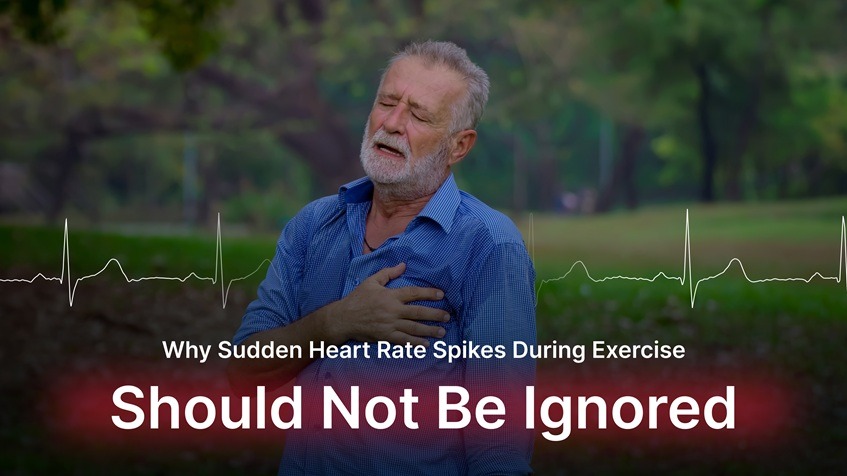
You push yourself during workouts to get stronger, faster, and healthier. A rising heart rate during exercise is normal. But when your heart rate suddenly spikes without warning, it is something you should not ignore. Many people experience unexpected heart rate jumps during workouts and brush them off as normal exertion. In reality, these sudden changes can sometimes signal cardiovascular stress, rhythm disturbances, dehydration, or overtraining.
Understanding why heart rate spikes happen, when they are normal, and when they deserve attention can help you train smarter and protect your long-term heart health.
What is a Sudden Heart Rate Spike
A sudden heart rate spike refers to a rapid and unexpected increase in your heart rate that does not match your activity level. For example, you may be jogging at an easy pace when your heart rate shoots up dramatically within seconds. Or you may be strength training when your pulse suddenly races far beyond what feels normal for that effort.
This is different from a controlled rise in heart rate as your body adapts to increased intensity. Sudden spikes feel abrupt, uncomfortable, and sometimes frightening.
Why Heart Rate Normally Increases During Exercise
When you exercise, your muscles demand more oxygen. Your heart meets this demand by beating faster and pumping more blood. This increase is guided by your fitness level, intensity, hydration, breathing, and body temperature. In healthy conditions, your heart rate rises gradually and settles quickly once exercise stops.
Problems arise when this increase becomes unpredictable or excessive for the workload you are performing.
Common Causes of Sudden Heart Rate Spikes
Sudden heart rate increases can happen for many reasons. Some are harmless. Others deserve medical attention.
Dehydration and Electrolyte Imbalance
When you lose fluids and electrolytes through sweat, your blood volume drops. This forces your heart to work harder to circulate blood. Low potassium and magnesium levels can also make the heart more irritable and prone to rhythm disturbances.
Overtraining and Poor Recovery
If you train intensely without enough recovery, your nervous system stays in a stressed state. This can cause exaggerated heart rate responses even during light activity. Over time, this pattern increases the risk of fatigue, poor performance, and heart rhythm instability.
Stimulants and Pre-Workout Supplements
Caffeine, nicotine, energy drinks, and some supplements can trigger sudden increases in heart rate. If you notice sharp spikes after using stimulants, your body is giving you feedback that your heart may be overstimulated.
Anxiety and Stress Response
Mental stress activates the same nervous system pathways as physical danger. This can trigger rapid heart rate changes even without a major increase in physical effort. The mind and heart are deeply connected.
Underlying Heart Rhythm Disturbances
Some sudden heart rate spikes occur due to electrical instability in the heart. These rhythm disturbances can cause the heart to jump suddenly from a normal rate to a very fast rate within seconds. While many rhythm issues are not immediately dangerous, some require medical evaluation and ongoing monitoring.
Why You Should Not Ignore Sudden Heart Rate Spikes
Ignoring repeated sudden heart rate spikes may mean missing early warning signs of cardiovascular strain. Over time, repeated excessive heart rate responses can:
- Increase your risk of dizziness and fainting
- Reduce exercise performance
- Delay recovery between sessions
- Increase the likelihood of heart rhythm disturbances
- Create unnecessary stress on your heart muscle
Many people assume heart problems only occur at rest. In reality, exercise is often where early irregularities show themselves first.
How Sudden Heart Rate Spikes Affect Your Training
When your heart rate behaves unpredictably, your training quality suffers. You may struggle to maintain steady pacing, feel unusually fatigued, or find that your performance fluctuates from session to session without explanation.
Your body relies on consistent heart rhythm behavior to deliver oxygen efficiently. Irregular spikes interfere with that delivery and create inefficient energy use. This makes both endurance and strength training feel harder than it should.
When Heart Rate Spikes Become a Medical Concern
You should take sudden heart rate spikes seriously if they occur with:
- Chest discomfort
- Lightheadedness or fainting
- Shortness of breath disproportionate to your activity
- Unexplained fatigue
- Palpitations that feel irregular rather than just fast
If these symptoms accompany heart rate spikes, a medical evaluation is strongly recommended.
The Role of Long-Term Heart Monitoring in Understanding Spikes
Short snapshots of heart rate during workouts do not always reveal the full picture. Some rhythm disturbances come and go unpredictably. This is where longer-duration heart monitoring becomes valuable.
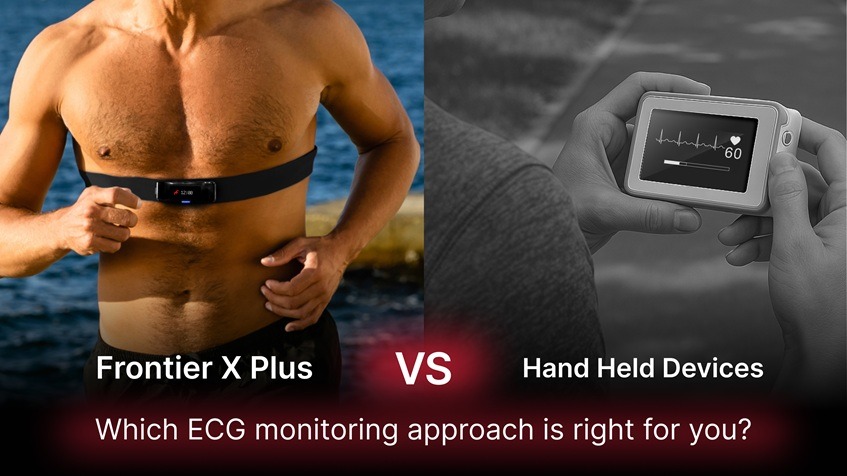
Medical-grade solutions like Frontier X Plus allow physicians to observe ECG waveform patterns over extended periods during daily life and activity. This helps clinicians see how your heart behaves during real-world stress, movement, and recovery rather than just in a clinic.
From a wellness perspective, the Frontier X2 allows you to track ECG recordings, heart rate, training load, breathing rate, and recovery trends during workouts and rest. While it does not diagnose conditions, it provides valuable data that your physician can use to assess patterns over time. This combination of wellness insight and clinical interpretation allows you to move from guessing to informed decision-making.
Why Athletes and Fitness Enthusiasts Are at Higher Risk of Ignoring These Spikes
If you train regularly, you are already used to your heart beating fast. This familiarity sometimes leads athletes to dismiss warning signs. The mindset of pushing through discomfort can override caution.
However, athletic hearts are not immune to stress. High-intensity training, dehydration, heat, travel, poor sleep, and competition anxiety all amplify heart rate instability. Monitoring heart rhythm trends alongside performance gives you a clearer picture of whether your cardiovascular system is adapting safely.
How to Respond When You Notice Sudden Heart Rate Spikes
If you experience unexpected spikes, here are practical steps you can take:
- Stop the activity and allow your heart rate to settle
- Hydrate and correct electrolyte intake
- Avoid stimulants before workouts
- Reduce intense training sessions temporarily
- Track patterns rather than single events
- Share long-term heart data with a healthcare professional
The goal is not to panic but to observe intelligently and respond early.
Sudden Heart Rate Spikes and Long-Term Heart Health
Repeated cardiovascular stress without explanation does not just affect your workouts. Over time, unmanaged rhythm instability and excessive heart strain can contribute to:
- Chronic fatigue
- Reduced exercise tolerance
- Increased arrhythmia risk
- Higher long-term cardiovascular strain
Early awareness gives you the chance to adjust training, nutrition, recovery, and medical care before problems escalate.
Why Consistent Monitoring Changes Everything
Relying only on how you feel can be misleading. Some people experience significant heart rhythm variation without obvious symptoms. Others feel major discomfort even when the rhythm remains stable.
By tracking heart behavior across training, sleep, recovery, and daily stress, you shift from reactive care to proactive heart health management. This is especially valuable if you train regularly, are returning after illness, or are entering higher intensity fitness phases.
Final Thoughts
Your heart is remarkably adaptable, but it is not limitless. Sudden heart rate spikes during exercise are not something you should normalize or ignore. They are signals. Sometimes they point to simple fixes like hydration or recovery. Other times they reveal deeper patterns that deserve medical attention.
By listening to your body and using long-term heart data wisely, you protect not only your performance but your long-term health.
FAQs
1. What causes sudden heart rate spikes during exercise
Sudden heart rate spikes can be caused by dehydration, electrolyte imbalance, stimulants, anxiety, overtraining, or underlying heart rhythm instability.
2. Is it normal for heart rate to suddenly jump during a workout
A gradual rise is normal. A sudden, sharp increase without a matching rise in effort is not typical and should be observed closely.
3. Can stress cause heart rate spikes while exercising
Yes. Mental stress activates the nervous system and can trigger rapid heart rate changes even at lower exercise intensity.
4. Should I stop exercising if my heart rate spikes suddenly
If the spike is unexpected or accompanied by symptoms like dizziness or chest discomfort, it is best to stop and allow your heart to settle.
5. How can I track heart rhythm during workouts
You can track heart rhythm and ECG patterns using wearable heart monitoring tools that record electrical activity and physiological trends over time for physician interpretation.
Related Posts
You might also like
-

Featured Articles
- 10 Signs You Might Have Heart Disease
 March 24, 2026
 - The Best Way to Track Heart Rate in the Gym: Wrist...
 March 22, 2026
 - Why Body Shock Monitoring Is Crucial for Every Athlete
 January 7, 2026
-
JOIN OUR NEWSLETTER
Get the latest articles, tips, offers & other exclusive content from Fourth Frontier.
