

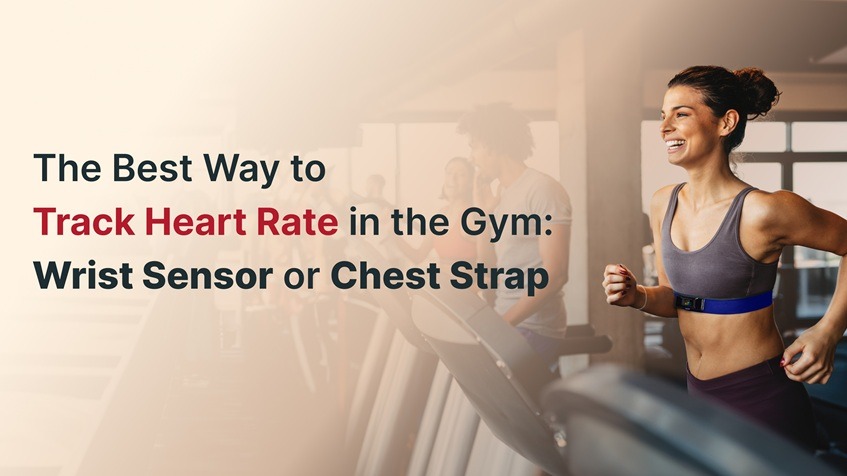
When you step into the gym, you are not just lifting weights or logging minutes on a cardio machine. You are training your heart. Heart rate tracking has become one of the most valuable tools for people who want to train smarter, improve endurance, and avoid overtraining. Yet one question keeps coming up.
What is the best way to track heart rate in the gym: a wrist sensor or a chest strap?
The answer depends on how you train, how accurate you want your data to be, and how much insight you expect from heart rate monitoring (HRM). Understanding the difference can help you make a better choice for your fitness goals.
Why Heart Rate Tracking Matters During Gym Workouts
Heart rate is more than a number on your watch. It reflects how hard your cardiovascular system is working in real time. Tracking heart rate during workouts helps you stay within the right intensity zone, improve aerobic fitness, manage fatigue, and recover more effectively.
Search trends show rising interest in terms like heart rate monitor for gym, best heart rate tracker workout, heart rate zones training, and chest strap heart rate monitor accuracy. This reflects a growing awareness that accurate heart rate data directly impacts training quality.
How Wrist-Based Heart Rate Sensors Work
Most smartwatches and fitness bands use optical heart rate sensors. These sensors emit light into the skin and estimate heart rate by detecting changes in blood flow. At rest or during steady activities like walking or easy cycling, wrist sensors can perform reasonably well.
Their biggest advantage is convenience. You simply wear the watch and start your workout. For many gym users, this ease of use is appealing and requires no additional setup.
Limitations of Wrist Sensors in the Gym
Gym workouts rarely involve smooth or consistent movement. Strength training, high-intensity intervals, rowing, and functional training involve gripping, wrist flexion, and muscle tension. These factors interfere with optical sensors.
As a result, wrist-based monitors may show delayed readings, miss sudden spikes in heart rate, or underestimate intensity during demanding sets. This is why many users notice that their watch struggles during heavy lifts or fast-paced intervals.
The growing search volume for phrases like wrist heart rate monitor accuracy, smartwatch heart rate vs chest strap, reflects this real-world experience.
How Chest Strap Heart Rate Monitors Work
Chest strap heart rate monitors sit close to the heart and measure the electrical signals produced with each heartbeat. This method captures heart rate directly rather than estimating it through blood flow.
Because of this, chest straps respond instantly to changes in intensity. Whether you transition from rest to sprinting or from light weights to heavy lifts, the data remains stable and precise.
This is why chest straps are widely used by athletes, coaches, and researchers who require dependable heart rate data.
Accuracy of Chest Straps During Gym Training
In the gym environment, chest straps consistently outperform wrist sensors in accuracy. Keywords such as best chest strap heart rate monitor gym, accurate heart rate monitor workout, and chest strap vs smartwatch heart rate continue to gain traction because users are recognizing the difference.
Chest straps excel during high-intensity interval training, resistance workouts, and endurance sessions under load. They capture true peak heart rate, realistic recovery patterns, and more reliable heart rate variability trends.
Comfort and Ease of Use
Comfort is often the deciding factor.
Wrist sensors are simple and unobtrusive. You put them on and forget about them.
Chest straps require correct placement and good skin contact. However, modern chest straps are lightweight, adjustable, and far more comfortable than earlier designs. Many users find that once adjusted properly, they barely notice them during workouts.
For those who value accuracy, the minor effort of wearing a chest strap is often worth it.
Calories, Training Zones, and Workout Quality
Calorie estimates and training zone calculations depend entirely on heart rate accuracy. If heart rate data is inaccurate, everything built on top of it becomes unreliable.
Wrist sensors may underestimate effort during intense workouts, leading to misleading calorie counts and poor training zone guidance. Chest straps provide more reliable inputs, allowing you to train within appropriate intensity ranges and manage fatigue more effectively.
This is particularly important for users looking for fat burn, heart rate zone, gym, cardio training zones, and heart-rate-based workout plans.
The Role of EKG-Based Monitoring in Active Individuals
Beyond standard heart rate tracking, there is increasing interest in EKG-based monitoring for people who want deeper insight into how their heart responds to physical stress and recovery.
Medical-grade devices like the Frontier X Plus are prescription-based, FDA-cleared, long-term EKG monitors used in clinical and physician-supervised settings. They record high-quality EKG data that physicians can review to assess heart rhythm trends during daily activities, including exercise.
For wellness and fitness users, devices like the Frontier X2 allow EKG recording and heart rate tracking for performance and wellness purposes. These tools help you understand how your heart responds across different training intensities, without making diagnostic claims.
For individuals who train frequently or push high workloads, this added layer of insight can be valuable.
Wrist Sensor or Chest Strap: Which Is Better for You
Choosing the right option depends on your training style and goals.
If your workouts are light, steady, and recreational, a wrist-based heart rate sensor may be sufficient.
If you perform high-intensity workouts, strength training, or endurance sessions and care about precise data, a chest strap is the better choice.
Many gym users start with a wrist device and eventually transition to a chest strap once they recognize the limitations of optical sensors during demanding workouts.
What Search Trends Reveal About User Preferences
The rise in searches for terms such as accurate heart rate monitors for gym, chest-strap heart rate monitor benefits, and EKG fitness devices indicates a shift toward data quality over convenience. People want heart rate numbers they can trust, especially when training intensity increases.
This shift also explains the growing interest in EKG-capable devices that provide deeper insight into cardiovascular response during exercise.
Final Thoughts
- The best way to track heart rate in the gym depends on what you expect from your training.
- Wrist sensors offer simplicity and ease of use.
- Chest straps deliver accuracy, consistency, and reliable performance data.
- For those seeking a deeper understanding of heart response over time, EKG-based monitoring tools offer an additional level of awareness.
- Your heart is doing the hardest work during every workout. Choosing the right tracking method helps you train smarter, recover better, and stay confident in the gym.
FAQs
Is a chest strap heart rate monitor more accurate than a wrist sensor?
Yes. Chest strap monitors are generally more accurate, especially during high-intensity and strength-based workouts, because they measure electrical heart signals directly.
Are wrist heart rate monitors reliable for gym workouts?
They can work for steady, low-intensity sessions but may struggle during resistance training and interval workouts.
What is the best heart rate monitor for gym training
For accuracy and consistency during gym workouts, chest-strap-based heart rate monitors are considered the best.
Can heart rate tracking improve workout performance?
Yes. Accurate heart rate tracking helps you train in the correct intensity zones, manage fatigue, and improve recovery.
Do EKG-based fitness devices help active individuals?
EKG-based devices help users understand heart response patterns during exercise and recovery, offering insight beyond basic heart rate numbers.
Related Posts
You might also like



-

Featured Articles
- Preparing for London or Boston Marathon? These Metrics...
 March 30, 2026
 - 10 Signs You Might Have Heart Disease
 March 24, 2026
 - The Best Way to Track Heart Rate in the Gym: Wrist...
 March 22, 2026
-
JOIN OUR NEWSLETTER
Get the latest articles, tips, offers & other exclusive content from Fourth Frontier.
