

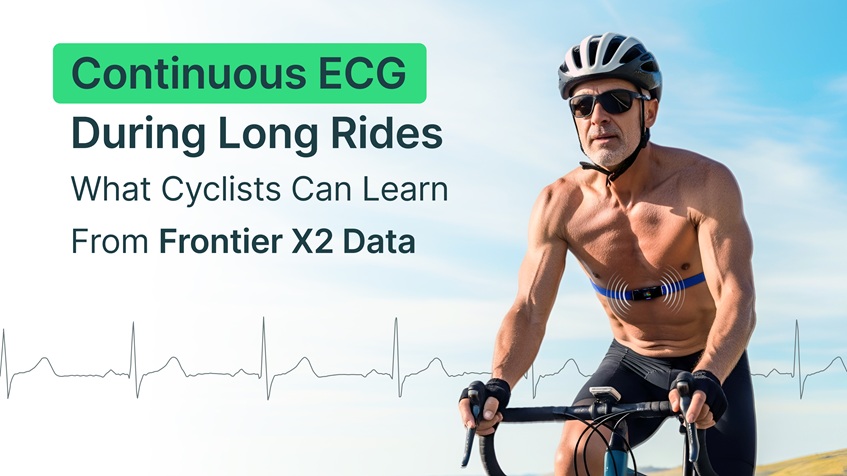
Long distance cycling pushes your body in ways that only a handful of other endurance sports do. The climbs, the heat, the hours of steady effort, the sudden bursts of power, the stress of descents, the recovery periods between intervals, all these influence how your heart behaves. If you have ever finished a ride wondering why your heart rate suddenly spiked on a mild climb or why your legs felt strong but your breathing did not match the effort, you are not alone. Cyclists across the world are beginning to realise something important. The key to better performance and better health is hidden right inside your own heart data.
And that is exactly where continuous ECG data becomes a powerful tool. When you see how your heart responds to real world effort in real time, the way you ride, train and recover begins to change.
Today, continuous ECG is no longer something limited to hospitals and clinical labs. Cyclists can now observe detailed heart signals during long rides, helping them understand strain, recovery and early warning patterns that simple Heart Rate numbers cannot show. We take you through what continuous ECG during long rides means, what you can learn from Frontier X2-style ECG data and how long term monitoring with wellness and medical devices fits into your training and overall safety.
Why Cyclists Need More Than Just Heart Rate
Most cyclists train with heart rate monitors or smartwatches. They are great tools, but there is one big limitation. They only show how fast your heart is beating, not how well it is beating.
Two riders can show the same heart rate of 165 beats per minute. One might be perfectly stable and efficient while the other could be showing irregular variations, inefficient electrical activity or early signs of heart stress. Heart rate does not tell you that story.
Continuous ECG, on the other hand, shows the electrical behaviour of your heart throughout your ride. It gives you a moment by moment picture of how your heart handles load, fatigue, heat, dehydration, elevation and stress.
What Continuous ECG Reveals During Long Rides
1. Effort zones that actually match your physiology
You may think you are in Zone 2, but your heart may be showing electrical stress patterns that suggest you are pushing harder than you realise. Continuous ECG helps you learn the truth about your zones. Over time, you can match your perceived effort to your actual cardiac response, improving both safety and performance.
2. Early signs of overheating and dehydration
Long rides in heat can silently strain your heart. ECG patterns often show subtle shifts even before your heart rate rises dramatically. These changes can help you correct your hydration or cooling strategies early.
3. How your heart behaves during climbs versus flats
Climbing is where your cardiac workload spikes. ECG data can show how stable your heart is during long climbs, how quickly it adapts to gradient changes and how effectively it recovers on descents. For cyclists who frequently ride hilly routes, this insight is invaluable.
4. Stress reactions during sudden accelerations
Surges, sprints and gear changes create rapid changes in cardiac load. ECG signals show how abrupt these transitions are for your heart. If the patterns repeatedly show instability, you know exactly which parts of your ride need better conditioning.
5. How fatigue affects your electrical stability
Toward the end of a ride, fatigue shows up in your heart far before your legs feel heavy. Continuous ECG can reveal increased variability, erratic contractions or stress signatures. Knowing this helps you plan rest intervals and nutrition.
The Frontier X2 Advantage: What Cyclists Learn From This Style of Data
Cyclists who use ECG recording devices during training often report specific discoveries that changed the way they ride:
You learn the difference between fitness fatigue and cardiac strain: Two riders can feel equally tired, but their ECG traces tell completely different stories. This helps you avoid pushing through the wrong kind of fatigue.
You discover how poorly timed nutrition affects your heart: Bonking, sudden drops in glucose and electrolyte imbalance all leave cardiac signatures. Over time, you begin to fuel with better timing.
You understand your recovery window better: Your post-ride-ECG patterns can show how quickly your heart settles back into a stable rhythm. This helps you plan training blocks more effectively.
You can identify patterns across weeks of training: Long term trends help you see whether your heart is adapting well or if there are periods where stress load is rising too quickly.
How Frontier X Plus and Frontier X2 Fit Into Long Ride Monitoring
If you are exploring long term heart monitoring during cycling, it is important to know the difference between medical and wellness tools. The Frontier X Plus is an FDA-cleared medical grade, prescription-based long term ECG monitor cleared for use in detecting atrial fibrillation, tachycardia and bradycardia. Cyclists use this when physicians want long term ECG recordings to evaluate cardiac trends.
The Frontier X2 is a wellness grade device that records ECG and heart rate data to help athletes understand effort, strain and recovery trends during training. This allows you to observe how your heart responds to long rides without needing patch-based systems or repeated adhesive monitors.
Both offer the ability to review heart behaviour during real rides, giving you a clearer picture of your own physiology and helping you adjust your training accordingly.
FAQs About Continuous ECG for Cyclists
1. Why is continuous ECG better than heart rate for long rides?
Heart rate only shows how fast your heart beats. Continuous ECG shows how well it beats. It helps you understand stress, rhythm patterns, fatigue and electrical changes that heart rate alone cannot reveal.
2. Can continuous ECG help me improve my cycling performance?
Yes. By matching ECG patterns to your effort, you can train more efficiently, manage fatigue better and avoid pushing into harmful overload.
3. Do I need a doctor to interpret my ECG every time?
Not necessarily. Athletes often use ECG devices to observe general training patterns. For medical concerns or unusual ECG findings, physicians can review the recordings and guide you professionally.
4. Is long term monitoring useful for recreational cyclists?
Absolutely. Even non competitive riders benefit from understanding how their heart reacts to heat, climbs and long endurance effort. It can help prevent overtraining and guide safer riding habits.
5. What is the main advantage of using ECG over wrist based heart trackers?
Wearable heart rate trackers rely on optical sensors which can become inaccurate during sweat, movement or vibration. ECG records electrical activity directly and remains stable during intense effort, providing more dependable insights.
Related Posts
You might also like


-

Featured Articles
- Preparing for London or Boston Marathon? These Metrics...
 March 30, 2026
 - 10 Signs You Might Have Heart Disease
 March 24, 2026
 - The Best Way to Track Heart Rate in the Gym: Wrist...
 March 22, 2026
-
JOIN OUR NEWSLETTER
Get the latest articles, tips, offers & other exclusive content from Fourth Frontier.
