
Cycling + EKG: The Missing Metric for Endurance Athletes
By: Fourth Frontier -
May 29, 2026 10:59 am

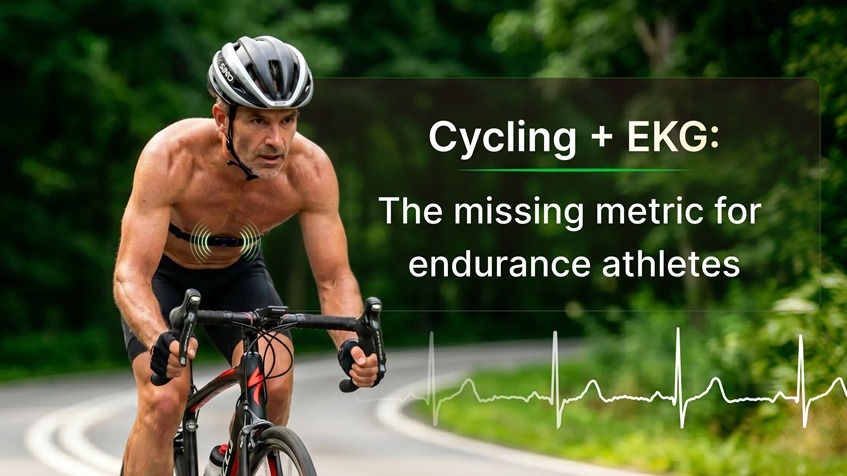
Cyclists track almost everything: Speed, Cadence, Power, Distance, Elevation, Training load, Recovery scores, Nutrition, Sleep.
Modern endurance training is built around data, and for good reason. The more clearly you understand how your body responds to stress, the better you can manage effort, improve performance, and recover consistently. But even with all this information, one area is still often overlooked: the electrical activity of the heart itself.
Most cycling metrics tell you what you are doing externally. EKG adds insight into what is happening internally while you do it. And as endurance training becomes more structured and demanding, that difference starts to matter more. For many cyclists, EKG is becoming the missing metric that connects performance, recovery, and heart awareness in a way traditional fitness tracking cannot fully provide.
Cycling is different from many other sports because effort can remain elevated for long periods without obvious signs of fatigue early on.
A rider may spend hours holding steady output during climbs, tempo rides, or long endurance sessions while heart rate, breathing, hydration demands, and cardiovascular strain continue building gradually in the background.
This is especially true during:
Because cycling is low-impact, many athletes can tolerate large training volumes. But tolerating volume and adapting to it effectively are not always the same thing. That is why endurance athletes increasingly rely on physiological data rather than effort perception alone.
Most cyclists already use metrics such as:
These are valuable tools, but they mostly describe external performance. They tell you how much work was done, not always how your cardiovascular system responded while doing it.
For example, two rides may produce identical power numbers while placing very different stress on the body depending on:
This is where deeper heart monitoring becomes important.
Heart rate has long been used in endurance sports because it reflects internal effort more directly than pace or power alone. But standard heart rate tracking still has limitations.
Most cyclists use wrist-based optical sensors or basic chest straps that primarily focus on beats per minute. While useful, heart rate alone does not always provide enough context about how the heart is behaving during prolonged stress.
Two workouts can show similar average heart rates while the body experiences very different levels of fatigue and cardiovascular demand underneath; that is why endurance athletes are becoming more interested in EKG-based monitoring.
EKG, or electrocardiography, measures the electrical activity of the heart directly. Instead of simply showing how fast the heart is beating, it provides a clearer view of how the heart responds during exercise, recovery, and physiological stress. For cyclists, that deeper level of insight can make training, pacing, and recovery decisions far more informed.
Cycling often involves vibration, sweat, changing posture, and rapid effort transitions. Optical wrist sensors can struggle under these conditions, especially during:
Chest-based EKG monitoring captures heart activity directly from the chest, making the signal more stable during movement and high intensity, becoming especially valuable during structured interval training where accurate zone control matters.
Endurance athletes spend large portions of training balancing intensity carefully.
Too easy, and adaptation becomes limited. Too hard, and recovery suffers.
EKG-based monitoring helps cyclists understand how the cardiovascular system responds across different efforts rather than relying entirely on pace or power targets.
This becomes useful for:
When the heart response is measured more precisely, pacing decisions become more informed.
Cycling performance is not built only during hard rides. It is built during recovery between them.
One of the biggest mistakes endurance athletes make is assuming they are recovered simply because soreness is low or motivation feels high. Physiology does not always recover at the same speed as perception. EKG-derived metrics such as heart rate variability trends and resting heart behavior can provide additional insight into how the body is responding to cumulative training stress.
This helps cyclists:
Over time, this improves consistency, which is one of the most important predictors of endurance progress.
Long rides create unique cardiovascular demands because fatigue accumulates slowly over hours rather than minutes. Early in a ride, effort may feel smooth and sustainable. But dehydration, rising core temperature, glycogen depletion, and muscular fatigue gradually increase strain on the cardiovascular system.
One of the clearest signs of this is heart rate drift, where heart rate climbs despite maintaining similar pace or power. Tracking these changes accurately helps cyclists understand:
Reliable EKG-based monitoring makes these trends easier to interpret because the signal remains more stable during prolonged movement.
Cyclists already have access to enormous amounts of training data. The challenge is not collecting more numbers. It is understanding which numbers actually matter.
Power tells you what the legs produced. Pace tells you how fast you moved. But EKG-based monitoring adds insight into how the heart responded throughout the effort itself. That creates a more complete picture of endurance performance.
Frontier X2 is a chest-worn device that records EKG and heart rate during exercise, recovery, and daily activity. Because it captures electrical heart activity directly from the chest, it remains stable during long rides, interval sessions, climbs, and high-intensity training where wrist-based sensors may become less reliable.
For cyclists, this provides:
This becomes especially valuable for endurance athletes who train with structure and rely on physiological feedback to guide pacing and recovery decisions.
Indoor trainer sessions often feel harder than outdoor riding even at similar power outputs.
Limited airflow, rising body temperature, and continuous pedaling without natural terrain variation increase cardiovascular strain quickly.
Because indoor sessions are commonly used for structured interval work, accurate heart monitoring becomes even more important.
EKG-based tracking helps cyclists understand how the body responds under these highly controlled but physiologically demanding conditions.
There is a growing shift happening in endurance sports.
Athletes are no longer focused only on performance metrics. They are becoming more interested in understanding how the heart responds to training over time.
This includes questions like:
EKG-based monitoring helps provide context around those questions.
For many cyclists, EKG monitoring begins as a performance tool but gradually becomes something broader: a way to stay more aware of how the body responds under stress.
Endurance athletes spend years placing repeated demands on the cardiovascular system through:
Understanding those responses more clearly creates greater confidence during training and recovery alike.
Cycling has always been a data-driven sport. But as endurance training becomes more advanced, athletes are realizing that external metrics alone do not tell the full story.
Power, speed, cadence, and pace explain what the body produced, whereas EKG helps explain how the cardiovascular system handled the effort behind those numbers.
That is why EKG is becoming an increasingly important metric for endurance athletes – not because it replaces traditional training data, but because it adds the physiological context those metrics often miss.
And in a sport where performance depends on balancing effort, recovery, and long-term consistency, that context can make a meaningful difference.







JOIN OUR NEWSLETTER
Get the latest articles, tips, offers & other exclusive content from Fourth Frontier.
