

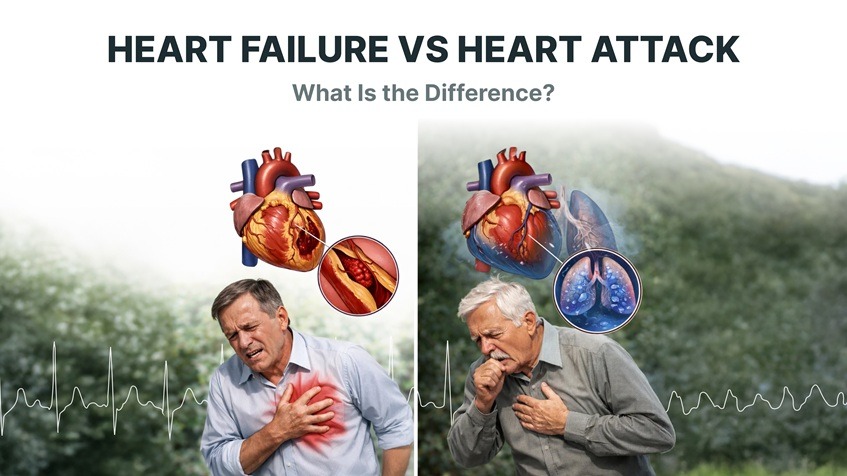
Heart failure and heart attack are often used interchangeably in everyday conversations. But they are not in the same condition. Understanding the difference can help you recognize symptoms earlier, take the right action, and protect your heart health in the long run.
Both conditions affect the heart but in very different ways. One is usually sudden and dramatic, while the other develops gradually over time. Knowing how they differ can quite literally save lives.
What Is a Heart Attack
A heart attack happens when blood flow to part of the heart muscle is suddenly blocked. This blockage is most often caused by a blood clot forming on top of a fatty plaque in the coronary arteries.
When oxygen-rich blood cannot reach the heart muscle, that area begins to suffer damage. The longer the blockage lasts, the more permanent the damage can be.
Common symptoms of a heart attack
You may experience chest pressure or tightness, pain radiating to the arm, jaw, or back, shortness of breath, nausea, sweating, dizziness, or extreme fatigue. Some people, especially women, older adults, and those with diabetes, may have subtle or even silent symptoms.
A heart attack is a medical emergency. Immediate treatment is critical.
What Is Heart Failure
Heart failure does not mean the heart has stopped working. It means the heart is not pumping blood as efficiently as it should.
This can happen because the heart muscle has become weak, stiff, or damaged over time. Heart failure usually develops slowly and worsens gradually if not managed properly.
Common symptoms of heart failure
You may notice shortness of breath during activity or while lying down, swelling in the legs, ankles, or feet, persistent fatigue, rapid weight gain from fluid buildup, and reduced ability to exercise.
Heart failure is a chronic condition, but with proper care,e many people live full, meaningful lives.
Aspect |
Heart Attack |
Heart Failure |
| What it is | Sudden blockage of blood flow to the heart muscle | A long-term condition where the heart cannot pump blood efficiently |
| Onset | Sudden and unexpected | Gradual and progressive |
| Primary cause | Blocked coronary artery | Weakened or stiff heart muscle |
| Urgency | Medical emergency | Chronic condition requiring ongoing care |
| Symptoms | Chest pain, shortness of breath, sweating, and nausea | Fatigue, swelling, breathlessness, reduced exercise tolerance |
| Damage | Often, permanent muscle damage | Functional decline over time |
| Treatment focus | Restoring blood flow quickly | Managing symptoms to slow progression |
| Monitoring need | Short-term and follow-up monitoring | Long-term symptom and rhythm tracking |
| Lifestyle role | Critical after recovery | Essential for long-term stability |
Can a Heart Attack Lead to Heart Failure
Yes, it can. When a heart attack damages a significant portion of the heart muscle, the heart may lose its ability to pump efficiently. This damage can increase the risk of developing heart failure later.
This is why follow-up care after a heart attack is just as important as emergency treatment.
Risk Factors You Should Know
Both heart attack and heart failure share many risk factors.
These include high blood pressure, high cholesterol, diabetes, smoking, obesity, physical inactivity, chronic stress, and family history of heart conditions.
Managing these risk factors early can dramatically reduce your chances of developing serious heart problems.
Why Early Detection Matters
Many people ignore early warning signs because they feel mild or inconsistent. Fatigue, occasional breathlessness, or palpitations may not seem alarming at first.
But subtle changes in heart rhythm, heart rate, or exercise tolerance can provide important clues about underlying heart conditions.
Paying attention to these signals and discussing them with a healthcare professional can make a real difference.
The Role of Heart Rhythm Monitoring
Changes in heart rhythm can accompany both heart attacks and heart failure.
Longer-duration heart rhythm monitoring can help physicians observe trends, patterns, and irregularities that may not be apparent during short clinic visits.
Medical grade Frontier X Plus
Frontier X Plus is a prescription-based, FDA-cleared long-term ECG monitor. It is designed to record ECG data over extended periods, which can support physicians in assessing heart rhythm trends related to conditions such as atrial fibrillation, bradycardia, and tachycardia.
The data helps clinicians correlate symptoms with heart rhythm behavior during daily activities, sleep, and recovery.
Wellness grade Frontier X2
Frontier X2 is a wellness-focused device that records ECG and heart rate for fitness and recovery insights. It supports understanding how your heart responds to exercise stress and rest, which can be valuable for individuals focused on preventive heart health.
These tools do not replace clinical diagnosis, but they can support informed discussions between you and your physician.
Living With Heart Failure
A diagnosis of heart failure can feel overwhelming but it is manageable.
Treatment usually includes medications, lifestyle changes, dietary adjustments, and regular follow-ups. Monitoring symptoms and maintaining physical activity within recommended limits can significantly improve quality of life.
Many people continue to work, travel, exercise, and enjoy family life while living with heart failure.
How You Can Protect Your Heart
Focus on daily habits that support heart health.
Eat a balanced diet rich in fruits, vegetables, lean proteins, and whole grains. Stay physically active, manage stress, sleep well, and follow prescribed treatments consistently.
Regular checkups and awareness of your heart rhythm and symptoms are key.
FAQs
What is the main difference between heart failure and heart attack
A heart attack is caused by sudden blocked blood flow to the heart. Heart failure is a long-term condition where the heart cannot pump blood efficiently.
Can you have heart failure without having a heart attack
Yes. High blood pressure, valve disease, infections, and long-term heart strain can cause heart failure without a prior heart attack.
Is heart failure more dangerous than a heart attack
Both are serious. A heart attack is immediately life-threatening. Heart failure is a chronic condition that requires long-term management.
Can heart failure be reversed?
Heart failure is usually not fully reversible but symptoms and progression can often be significantly improved with proper treatment.
What are the early signs of heart problems you should not ignore
Persistent fatigue, breathlessness, swelling in the legs, chest discomfort, palpitations, and reduced exercise tolerance should always be evaluated.
How does heart rhythm monitoring help
Monitoring heart rhythm over time can help physicians understand irregular patterns, correlate symptoms, and guide treatment decisions.
Final Thoughts
Heart failure and heart attack are different but closely connected conditions. Understanding the difference empowers you to act early, manage risk factors, and seek timely care.
Your heart works continuously for you. Paying attention to its signals and supporting it with healthy choices and informed monitoring can make a lasting difference in your heart health journey.
Related Posts
You might also like



-

Featured Articles
- Preparing for London or Boston Marathon? These Metrics...
 March 30, 2026
 - 10 Signs You Might Have Heart Disease
 March 24, 2026
 - The Best Way to Track Heart Rate in the Gym: Wrist...
 March 22, 2026
-
JOIN OUR NEWSLETTER
Get the latest articles, tips, offers & other exclusive content from Fourth Frontier.
