
You Already Own a Smartwatch. Is a $649 Heart Rate Monitor Worth It?
By: Fourth Frontier -
November 10, 2026 7:37 am

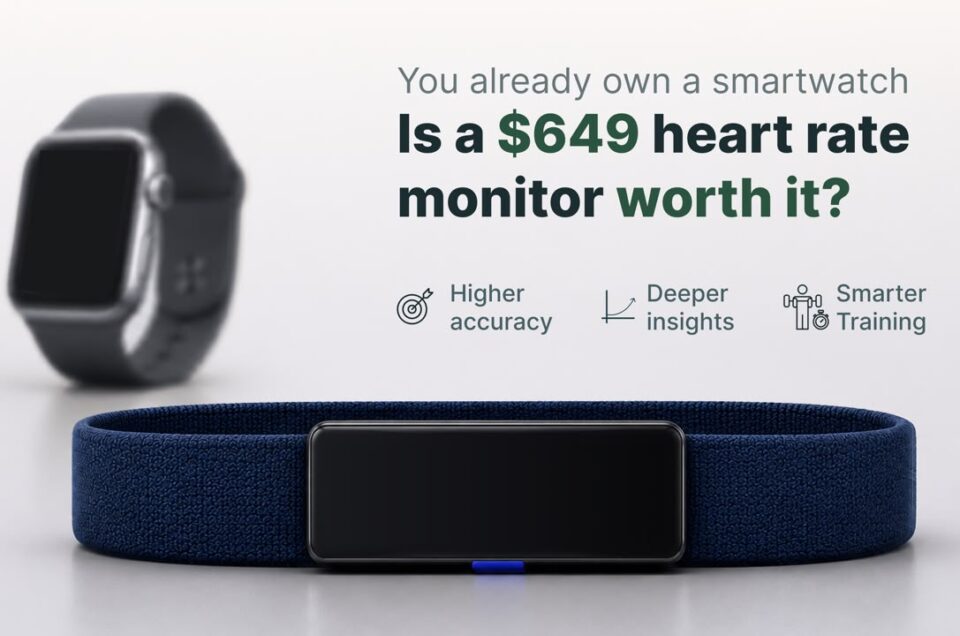
Your smartwatch tracks your heart rate, counts your steps, monitors your sleep, and records your workouts. So why would you consider spending another $649 on a dedicated heart-rate monitor?
It’s a reasonable question, especially when today’s smartwatches offer increasingly sophisticated fitness features.
For everyday activity tracking, smartwatches provide a convenient and practical solution. However, for people who train regularly, there is another consideration: how effectively can the information help guide their workouts?
Are Your Heart-Rate Zones Actually Personal?
Most fitness enthusiasts are familiar with heart-rate training zones. They help determine whether you’re exercising at an easy, moderate, or high intensity.
But there is an important detail. Two people of the same age can have very different cardiovascular fitness levels, which means the same heart-rate target may not represent the same level of effort.
A 2025 systematic review published in Sports Medicine analyzed 42 studies involving 1,544 participants to examine how different approaches to prescribing exercise intensity affected cardiovascular fitness.
In controlled studies, participants following training programs based on individual physiological thresholds experienced greater average improvements in VO₂ max than those using conventional intensity targets.
VO₂ max measures how much oxygen your body can use during demanding exercise and is an important indicator of aerobic fitness.
The findings suggest that understanding individual exercise thresholds can help make training more effective.
Conventional heart-rate zones are typically based on generalized estimates that may not fully reflect individual fitness levels or physiological responses to exercise.
But for people following structured training plans, understanding their individual response to exercise can offer more meaningful guidance than relying on general estimates alone.
Beyond Heart Rate: Understanding What Your Workout Demands
Knowing your heart rate is one thing. Understanding what it reveals about your workout is another.
Consider two five-mile runs completed at the same pace.
During the first, your heart rate remains relatively steady. During the second, it gradually increases despite no change in speed.
This pattern, known as cardiovascular drift, can be influenced by factors such as heat, hydration, and fatigue.
An average heart-rate reading alone may not reveal these differences.
More comprehensive cardiovascular monitoring provides additional context:
Together, these insights help individuals understand their training patterns, manage workout intensity, and make more informed decisions about progression.
The value lies not simply in measuring heart rate, but in understanding what that measurement means for your training.
What Could You Actually Do Differently?
For someone exercising occasionally, tracking workout duration and general heart rate may be enough.
For someone training four or five days a week, the questions often become more specific.
Are your easy runs genuinely easy? Are you consistently pushing beyond your intended heart-rate zones? Is your training load increasing faster than planned?
More detailed monitoring can help answer these questions.
Real-time heart-rate zone alerts can guide exercise intensity without requiring frequent screen checks. Reviewing strain and training load over several weeks can help identify changes in workload and support more informed training decisions.
The value isn’t simply having another set of numbers.
It’s knowing when to adjust your effort and having better information to guide that decision.
So, Is a Dedicated Heart Rate Monitor Worth the Investment?
It depends on your fitness goals.
If you’re primarily tracking steps, sleep, and occasional workouts, your smartwatch may already meet your needs.
But if you’re a regular runner, cyclist, or fitness enthusiast looking for more detailed cardiovascular insights, a dedicated monitor may offer meaningful value.
Frontier X3 brings together chest-based ECG heart-rate monitoring, cardiovascular strain, training load, breathing rate, and HRV insights. Personalized vibration alerts help users stay within selected heart-rate zones, while long-term trends provide context for training progress.
For those seeking deeper performance analysis, advanced features such as VO₂ max estimates, ventilatory-threshold-based training zones, and readiness scores are available through the optional Frontier Premium subscription.
And with Frontier X3 available at a special offer price, investing in more detailed fitness insights becomes more accessible.
A dedicated heart-rate monitor can serve a more specialized purpose: helping you better understand your body’s response to exercise.
Because the value of fitness technology isn’t just in what it measures, but in how effectively those measurements help you train.








JOIN OUR NEWSLETTER
Get the latest articles, tips, offers & other exclusive content from Fourth Frontier.
