

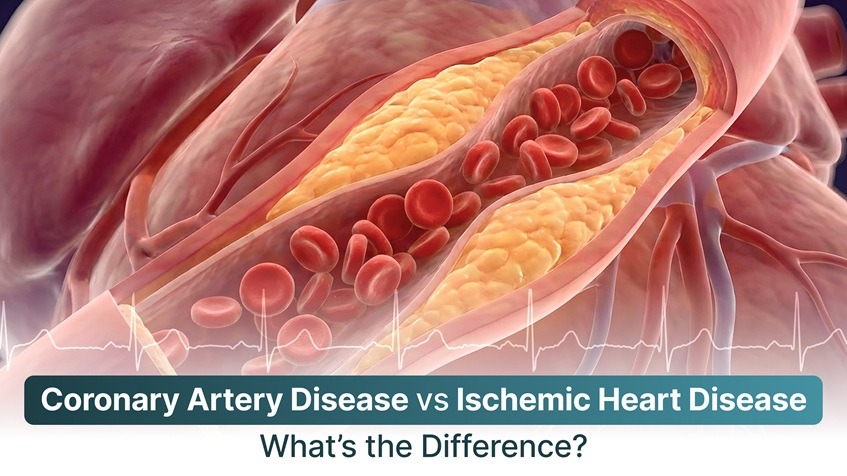
Heart disease is the leading cause of mortality worldwide, and two terms you’ll often hear in this context are Coronary Artery Disease (CAD) and Ischemic Heart Disease (IHD). Many people – even patients and sometimes clinicians – use them interchangeably, but they are not exactly the same. Understanding the distinction can help you recognize symptoms early, seek timely medical care, and explore modern tools like ECG monitoring to protect your heart health.
What Is Coronary Artery Disease (CAD)?
Coronary Artery Disease refers specifically to a condition where the coronary arteries, the vessels that supply oxygen-rich blood to the heart, become narrowed or blocked. This narrowing usually happens due to atherosclerosis – the buildup of fatty deposits, cholesterol, and calcium (known as plaque) inside the arteries.
When the arteries are narrowed, blood flow to the heart muscle is reduced, increasing the risk of chest pain (angina), shortness of breath, or even myocardial infarction (heart attack).
Common CAD symptoms include:
- Pressure or pain in the chest (angina)
- Shortness of breath during exertion
- Fatigue or weakness
- Pain radiating to the neck, jaw, shoulders, or arms
CAD is often described as the most common type of heart disease and is sometimes referred to as arteriosclerotic cardiovascular disease or atherosclerotic heart disease in medical literature.
What Is Ischemic Heart Disease (IHD)?
Ischemic Heart Disease is a broader term that refers to any heart problem caused by reduced blood supply (ischemia) to the heart muscle. While CAD is the leading cause of ischemia, other factors – such as severe anemia, coronary artery spasms, or microvascular dysfunction – can also trigger it.
In other words, all CAD is ischemic heart disease, but not all ischemic heart disease is CAD.
For example:
- CAD-related ischemia: Blocked arteries leading to chest pain.
- Non-CAD ischemia: Severe anemia or coronary spasms reducing oxygen supply even if arteries are not significantly narrowed.
IHD symptoms can include:
- Chest pain (angina)
- Palpitations or irregular heartbeats (atrial arrhythmia)
- Dizziness or fainting
- Heart failure symptoms like swelling in the legs and fatigue
Key Differences Between CAD and IHD
| Aspect | Coronary Artery Disease (CAD) | Ischemic Heart Disease (IHD) |
| Definition | Narrowing/blockage of coronary arteries due to plaque buildup | Any condition where blood supply to heart muscle is insufficient |
| Cause | Mainly atherosclerosis (plaque buildup) | CAD + other causes (anemia, coronary spasms, microvascular issues) |
| Scope | More specific term | Broader umbrella term |
| Symptoms | Angina, chest tightness, heart attack risk | Angina, arrhythmias, heart failure, ischemic cardiomyopathy |
| Diagnosis | Coronary angiography, CT scans, stress tests | ECG, continuous ECG, echocardiography, perfusion scans, angiography |
| Treatment | Medications, stents, bypass surgery | Treating underlying cause (CAD + non-CAD ischemia management) |
Why Early Detection Matters
Both CAD and IHD can progress silently for years before showing obvious symptoms. Sometimes, the first sign of CAD or IHD may be a heart attack. That’s why early detection through regular check-ups and screening is crucial.
Warning signs that may suggest heart ischemia include:
- Chest discomfort even at rest
- Shortness of breath while lying down
- Unexplained fatigue
- Sudden dizziness or fainting spells
- Palpitations
If you notice these signs of clogged arteries in the heart or plaque in arteries symptoms, consult your doctor immediately.
Diagnosis of CAD and IHD
Doctors rely on a combination of tests to diagnose CAD disease and ischemic heart conditions:
- Electrocardiogram (ECG or EKG): Detects ischemia, arrhythmias, or prior heart attacks.
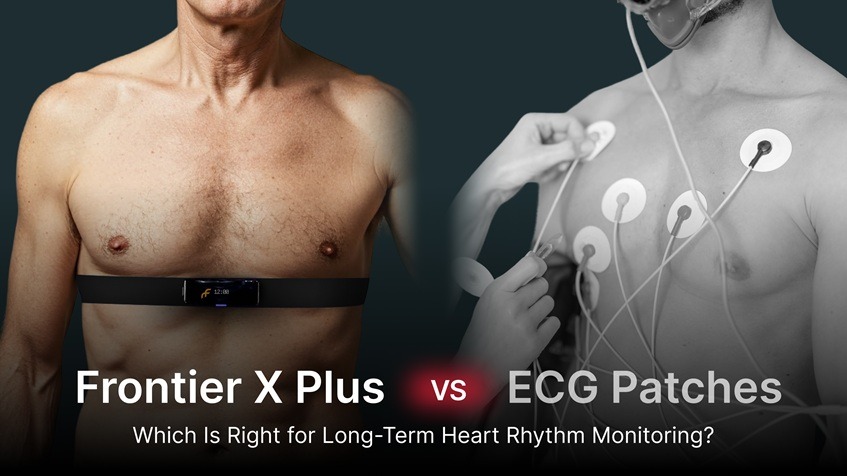
- ECG Monitoring: Chest-strap wearable ECG monitors, such as the Frontier X Plus, enable long-term recording of heart rhythm during daily activities, exercise, and sleep. This allows physicians to review rhythm trends and assess cardiac responses over time as part of a comprehensive clinical evaluation.
- Stress Tests: Measure heart function during exertion.
- Coronary CT Angiography (CCTA): Provides imaging of plaque and narrowing.
- Cardiac Catheterization (Angiogram): The gold standard for identifying arterial blockages.
- Echocardiogram: Ultrasound imaging to assess heart function.
Treatment for CAD and IHD
1. Lifestyle Modifications
- Quit smoking
- Eat a heart-healthy diet low in saturated fats and sugars
- Exercise regularly but safely (under medical supervision if diagnosed with heart disease)
- Manage stress and sleep conditions
2. Medications
- Antiplatelets (e.g., aspirin): To prevent blood clots
- Statins: To lower cholesterol
- Beta-blockers and calcium channel blockers: To control blood pressure and reduce strain on the heart
- Nitrates: To relieve angina symptoms
These are often referred to as CAD disease treatment drugs or ischemic heart disease management therapies.
(Important: The medications listed below are for general awareness only. Treatment should always be determined by a qualified physician. Never start, stop, or adjust any medication without consulting your healthcare provider.)
3. Interventional and Surgical Treatments
- Angioplasty with Stent Placement: Opens blocked arteries
- Coronary Artery Bypass Grafting (CABG): Reroutes blood flow around blocked arteries
- Advanced therapies for ischemic heart failure if the heart muscle has been significantly weakened
The Role of Long-Term ECG Monitoring
Modern longterm ECG monitors like the Frontier X Plus play a critical role in early detection and management of arrhythmias. Chest-strap wearable ECG monitors, such as the Frontier X Plus, enable long-term recording of heart rhythm during daily activities, exercise, and sleep. This allows physicians to review rhythm trends and assess cardiac responses over time as part of a comprehensive clinical evaluation.
For patients with suspected cardiac ischemia or ischemic arrhythmias, continuous monitoring can:
- Detect silent ischemic episodes that occur without chest pain
- Capture arrhythmias related to ischemic heart disease
- Provide data to physicians to personalize treatment
- Help patients track changes during exercise or stress
By spotting problems earlier, continuous ECG monitoring empowers patients and doctors to reduce the risk of heart attack, ischemic heart failure, or sudden cardiac arrest.
Conclusion
While Coronary Artery Disease (CAD) and Ischemic Heart Disease (IHD) are closely linked, they are not identical. CAD is a major cause of IHD, but ischemia can also result from other conditions. Understanding this distinction helps in recognizing symptoms, seeking appropriate treatment, and adopting preventive strategies.
With lifestyle changes, medical therapy, and advanced tools like continuous ECG monitoring, patients can detect problems early and significantly reduce their risk of heart disease.
FAQs
- Are coronary artery disease and ischemic heart disease the same?
Not exactly. CAD is a type of ischemic heart disease caused by blocked coronary arteries, but ischemia can occur from other factors too. - What are the early signs of clogged arteries in the heart?
Chest discomfort, shortness of breath, unusual fatigue, or pain in the arm, neck, or jaw can indicate artery narrowing. - How is CAD diagnosed?
Diagnostic tests may include ECG, continuous ECG monitoring, coronary angiography, echocardiography, and stress tests. - What is the best treatment for CAD?
Treatment for CAD includes lifestyle changes, medications like statins or beta-blockers, and in severe cases, angioplasty or bypass surgery. - Can ECG monitoring support evaluation of ischemic heart disease?
Yes. Long-term ECG recordings can capture heart-rhythm and rate patterns during daily activities that may not appear during clinic tests, enabling physicians to review trends and correlate them with symptoms as part of a broader clinical evaluation. - Does ischemic heart disease always lead to heart failure?
Not always, but untreated or severe ischemia can weaken the heart muscle over time, leading to ischemic heart failure.
Related Posts
You might also like


-

Featured Articles
- Preparing for London or Boston Marathon? These Metrics...
 March 30, 2026
 - 10 Signs You Might Have Heart Disease
 March 24, 2026
 - The Best Way to Track Heart Rate in the Gym: Wrist...
 March 22, 2026
-
JOIN OUR NEWSLETTER
Get the latest articles, tips, offers & other exclusive content from Fourth Frontier.
